
Reading Books vs Listening to Books: What’s the difference in the brain?
While my work here at Synaptex Studios is focused on bringing amazing neuroscience-themed clothing into the world, I also work as a neurologist. Recently, someone asked me why listening to a book feels different from physically reading one, and whether the brain actually processes audiobooks and written books differently.
That seemed exactly like the kind of nerdy neuroscience question people who enjoy brain-inspired clothing might also enjoy, so welcome to a neuroscience edition of the Synaptex blog.
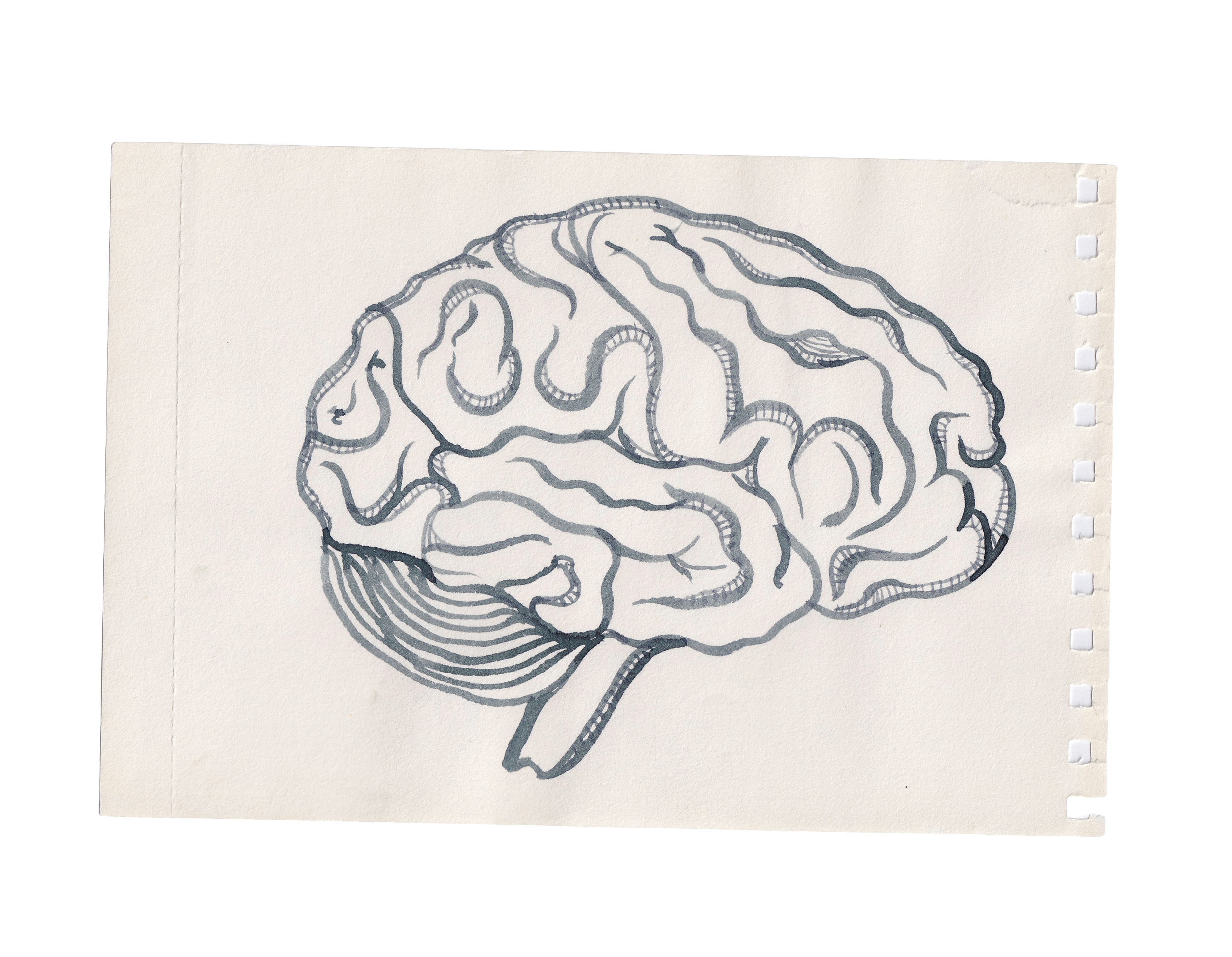
Brain by Ivy Ratliff, painted with her foraged shaggy mane mushroom ink
To help me sort through the pathways involved, I spoke with Dr. Caleb Pearson. Caleb Pearson, Psy.D., is a neuropsychologist and associate professor in the Departments of Neurology, Neurosurgery, and Psychiatry at the University of Kansas Medical Center, where he leads the Human Brain Mapping Program.
Dr. Pearson helped make the science simple: in order to process a word, the brain first has to know something about that word. And that knowledge comes from memory.
So, before we get to reading versus listening, we need a quick tour through how our brain processes memory.
We have several different types of memory. Working memory is the information we hold in mind and manipulate in the moment—like calculating how much change you are owed or remembering a phone number long enough to write it down.
Episodic memory lets us recall specific personal experiences, such as a vacation you took last year or what you ate for breakfast this morning.
Procedural memory is the long-term memory we rely on for skills and actions we no longer have to consciously think through, such as tying our shoes or typing without looking at the keyboard.
And then there is semantic memory: Knowledge with a capital K. Semantic memory is the stuff you know. The alphabet. Basic arithmetic. What a dog is. The lyrics to a song. The astonishing amount of obscure information you may have accumulated about your favorite hobby.
Semantic memory is a major workhorse when we read or listen to language. It Knows that the word dog refers to, well, a dog. It helps give meaning to the symbols and sounds around us and is supported by networks that include the temporal and parietal regions of the brain.
The interesting part is that written and spoken language reach that semantic memory knowledge through somewhat different routes.
When we listen, sounds called phonemes act as the building blocks of spoken words. When we read, written symbols called graphemes, letters and combinations of letters, serve as the visual building blocks of words.
Our auditory and visual systems take in those different kinds of information, recognize the patterns as language, and connect them with the knowledge stored in semantic memory. Each pathway also interacts somewhat differently with working memory.
In other words, reading and listening eventually allow us to reach much of the same stored knowledge, but they do not take exactly the same road to get there.
Which helps explain why they can feel so different.
People may also prefer one medium over another for all kinds of reasons. For some people, auditory information may simply be easier to process than visual information, or vice versa. Someone with dyslexia may find that audiobooks make literature far more accessible and enjoyable.
A neurologist friend of mine, an avid reader, recently tried audiobooks for the first time when his vision was temporarily decreased. He found that listening changed something about the experience for him: hearing another person narrate the story diminished the inner voice he normally creates while reading and altered the dynamics of his freedom of thinking about the book.
@TheBrainDocs put it nicely: “For dense or technical material, reading keeps a small edge because your eyes can slow down, reread a line, and sit with a hard idea.”
I have my own preferences, too. I listen best when I am doing something that requires relatively little attention, such as highway driving or cleaning. On the other hand, when I become deeply absorbed in something I am reading, the auditory world can practically disappear. I once came very close to missing a flight because I was so engrossed in a book, even though I was sitting directly in front of the gate where boarding was taking place.
Brains are strange and wonderful things.
And speaking of wonderful brains, I am currently reading Your Brain on Art: How Art Transforms Us by Susan Magsamen and Ivy Ross, which explores the growing field of NeuroArts. I started it months ago, putting in on pause for other books and projects -including reading the very large and excellent anthology Music and Mind, edited by Renée Fleming - and I am very happy to be back to it.
Both books explore something I find fascinating: the powerful ways that art, music, and creative experiences can influence the brain and our well-being.
That feels especially fitting here at Synaptex Studios, where neuroscience and art overlap every day.
Look for the next neuroscience edition of the blog, where I’ll dive into what happens in the brain when we experience art.